Quick Start
See our products Solar Connectors
Connectors for the reliable connection of PV modules and strings.
What do you need for your PV system? Click here to go straight to the right product range:
Solar Connectors
Connectors for the reliable connection of PV modules and strings.
Photovoltaic Fuses
Fuses and protective components for the safe operation of PV systems.
Tools for PV Installation
Tools for the assembly, fabrication and professional installation of PV components.
Photovoltaic systems convert sunlight directly into electrical energy via the photovoltaic effect. In solar cells, incident light generates a direct current (DC) voltage. However, a single solar cell produces only a low voltage. For this reason, multiple cells are connected to form a solar module. Several modules are then connected in series to form so-called strings.
In commercial and industrial systems, this can result in voltages of up to 1,500 V DC – placing high demands on all components used.
A PV system consists of several coordinated subsystems. The correct dimensioning and selection of each individual component is critical for the safety, performance, and service life of the overall system.
The service life of a PV system is 25–30 years. During this period, the components are exposed to extreme conditions: UV radiation, temperature fluctuations, moisture, and mechanical stress.
Inferior connections, undersized cables, or incompatible connectors lead to power losses, increased resistance, and in the worst case, fires. Choosing high-quality, standards-compliant components is therefore not optional – it is a necessity.
View Solar Cells and Solar PanelsThe DC side is the electrical foundation of every PV system. Depending on the system design, voltages of up to 1,000 V or 1,500 V DC may occur. This places correspondingly high demands on cables, connection technology, and protective components. Faulty or undersized connections can cause arcing, hot spots, and, in extreme cases, fires.
Correct dimensioning of DC cables is one of the most important planning tasks. The DC wiring is one of the most safety- and yield-critical components of a photovoltaic system. Solar cables connect modules, strings, string combiner boxes, and inverters. They are permanently exposed to weather conditions, temperature fluctuations, and mechanical loads – while simultaneously carrying high DC voltages.
MC4-compatible solar connectors have established themselves as the industry standard. Systems from manufacturers such as Stäubli Electrical Connectors enable permanently safe connections in outdoor environments.
Important:


String combiner boxes combine multiple strings and perform protection and monitoring functions. Specially designed photovoltaic fuses are used in this area, rated for high DC voltages.
DC protection measures include:
The inverter is the central link between the PV system and the power grid. In addition to converting DC into AC, it handles PV system control and monitoring functions.
Depending on system size and requirements, different inverter types are used: string inverters for small to medium-sized systems, central inverters for large ground-mounted systems, or microinverters for module-level power electronics. The number of connectable strings depends on the device type and the number of MPP trackers.
The determining factors for sizing include, among others:
Here too, the principle applies: the voltage drop should be kept as low as possible.
As a rule, separate protection is required before feeding into the main distribution board. This includes:
The AC-side protection is governed in particular by:
The meter cabinet for the PV system is the technical interface to the public grid.
The right protection technology is critical for the safe and long-term operation of a PV system – both on the DC and AC side. The relevant standards define clear requirements for personnel protection, cable protection and system protection.
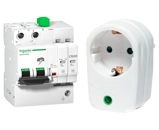
Surge Protection (SPD)
Surge protection is important on both the DC and AC side – especially for buildings with an external lightning protection system.
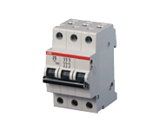
Photovoltaic Fuses
PV fuses are specifically designed for high DC voltages and differ from conventional AC fuses. They protect strings against reverse currents and short-circuit events.
Grid and System Protection (NA Protection)
For smaller systems, NA protection is often integrated into the inverter. For higher feed-in capacities, an external protection device may be required – depending on grid operator requirements.
Power losses in PV systems often develop gradually – caused by contact issues, insulation damage or faulty strings. Without regular monitoring and maintenance, such problems can go undetected for years and significantly reduce yield.
Key Tests at a Glance
AC-Side Tests
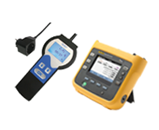
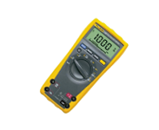
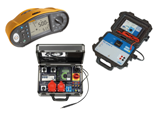
Measurement Equipment for PV Systems
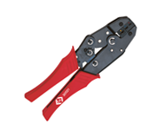
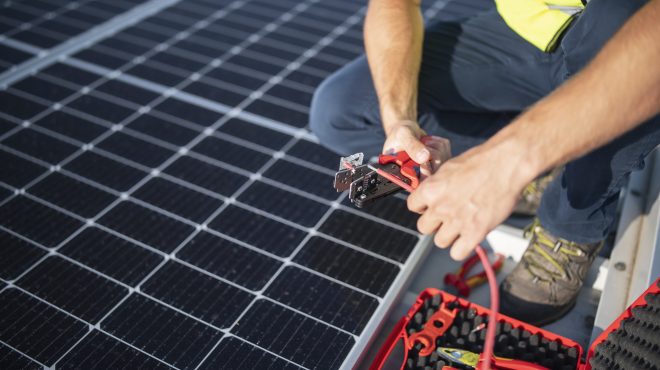
Poor crimp connections are one of the most common sources of error in PV installations. They lead to increased contact resistance, localised heat build-up, and, in the worst case, arcing and fires. Appropriate tools and matched accessories are therefore an essential part of system quality – both during initial installation and during service work.
Best Practices for Cable Assembly
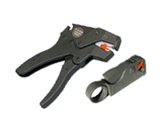
Tools for PV Systems
We work with leading manufacturers specialising in high-quality components for photovoltaic applications. Each manufacturer brings specific expertise and certified products for different areas of PV installation.
Stäubli Electrical Connectors
MC4 connector systems for standards-compliant, long-lasting connection technology on the DC side.
Discover Manufacturer
HellermannTyton
UV-resistant solutions for structured cable management in outdoor environments.
Discover Manufacturer
LAPP
Cables for photovoltaic applications with high voltage and temperature resistance.
Discover Manufacturer
Fluke
Measurement technology for DC and AC testing and structured system monitoring.
Discover ManufacturerIn PV systems, the interplay between connection, wiring, protection technology and measurement equipment determines reliability and efficiency. Our services support you from component selection through to long-term supply assurance – for both the DC and AC side.
Technical Consulting & Selection Support
We assist with the selection of suitable components covering connection, wiring and the protection of your PV system.
Clear Portfolio & Structured Product Search
From solar cables to photovoltaic fuses – all relevant components are available in one place and easy to find.
Fast Availability
Many products are available at short notice and ready for immediate use – for reliable installation and maintenance planning.
Interested in specific questions relating to PV systems? Our Knowledge Hub offers in-depth technical articles on photovoltaics, energy efficiency and connection technology – providing a solid foundation for evaluating and implementing your PV projects.