
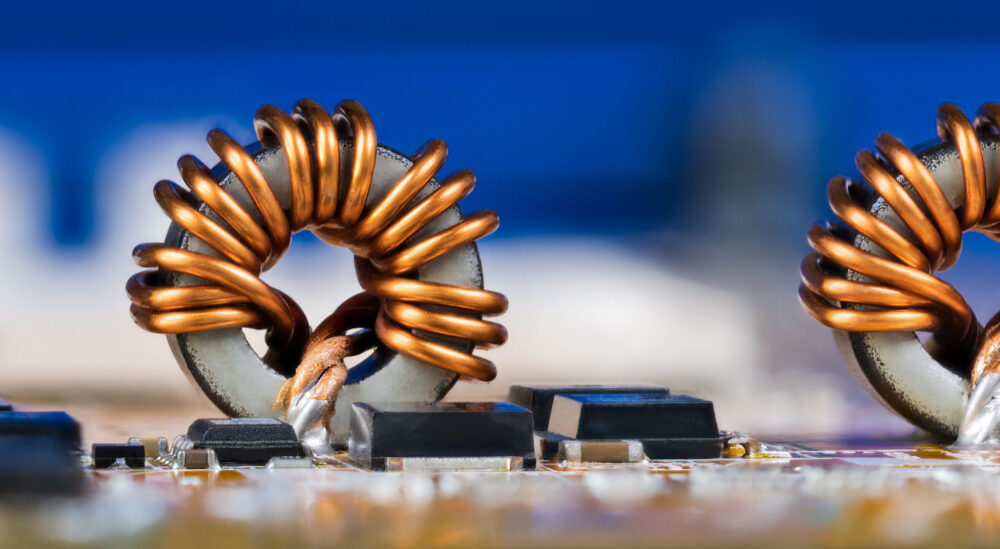
How to Use Inductors Correctly: From Interference Suppression to Energy Storage
Inductors are among the most important passive components in modern circuits. They significantly influence their efficiency, EMC behavior, and thermal stability. Nevertheless, they are often selected “as an afterthought.” In this article, you’ll learn what matters in practice and how to find the right inductor for your application step by step.
Table of contents
- Basics Explained: What Is Inductance?
- Definition: Inductance vs. Coil vs. Choke
- Interference Suppression and EMC: Understanding Inductors as Filter Elements
- Inductors in Switching Power Supplies: Why the Coil Determines Efficiency
- Energy Storage in the Magnetic Field: Important, but Not Always the Goal
- Designs and Technologies: Which Inductor Is Right for Which Application?
- Selection Guide: Which Inductor Do I Need and Why?
- Checklist: Selection by Application
- Finding the Right Inductance with the Right Criteria
Basics Explained: What Is Inductance?
An inductor is a component (usually a coil) that stores energy in a magnetic field. When current flows through the winding, a magnetic field is generated. If the current changes, the coil responds with a back-EMF: it “resists” rapid changes in current. So when the current suddenly rises or falls, the inductor slows down this change.
This is exactly what makes inductors so valuable in electronics: They can smooth out currents, reduce interference, and temporarily store energy in switching power supplies. In practice, inductors are often helpful when current waveforms need to be made more stable and “smoother”—for example, on a power rail or in a converter.
The inductance formula helps describe behavior in circuits. As a rule of thumb: The “greater” the inductance (for example, in µH), the more it slows down rapid current changes. Ultimately, however, component selection depends not only on the µH value but also on how the inductance behaves under real-world conditions, such as at high currents, at high temperatures, or at high switching frequencies.

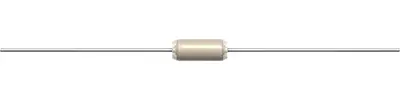

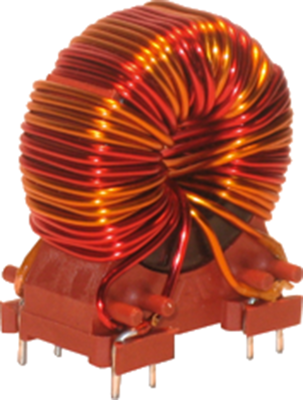


Definition: Inductance vs. Coil vs. Choke
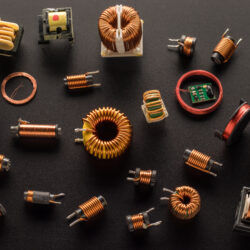
Inductance: a physical property of a component to “slow down” current changes (unit: Henry, H). In everyday language, “inductance” usually refers to the coil component that provides this property in a circuit.
Coil: Component form that generates inductance, usually a wire winding with or without a core
Choke: Inductor used in current paths for filtering, noise suppression, or energy storage
Interference Suppression and EMC: Understanding Inductors as Filter Elements
In many applications, inductors are primarily one thing: filter components. They are used to attenuate high-frequency interference and stabilize supply voltages. This is particularly relevant when rapid switching operations occur nearby, such as those caused by DC/DC converters, motor controllers, or digital interfaces.
What Inductors Actually Do in the Presence of Interference
Interference often manifests as high-frequency signal components on lines or power supplies. Inductors increase the “resistance”—more precisely, the impedance—for these fast components, thereby reducing the transmission of interference energy. In practice, this means:
- fewer interference spikes on the power supply
- lower emissions via cables
- more stable operation of sensitive ICs and sensors
Inductors in practice: typical filter circuits
For effective noise suppression, inductors are usually combined in practice with other passive components such as capacitors. The inductor is then connected in series and dampens rapid current changes, while the capacitor is connected in parallel and diverts high-frequency interference components to ground. A typical example is the LC filter, which smooths supply voltages and reduces interference downstream of switching power supplies.
For more demanding applications, a pi filter (C–L–C) is often used. Here, the inductor is placed between two capacitors, which intercepts interference at the input and further stabilizes the voltage at the load. For very high frequencies, ferrite beads are also used. These are compact and effective, but do not always replace an inductor with a defined µH value and current-carrying capacity.
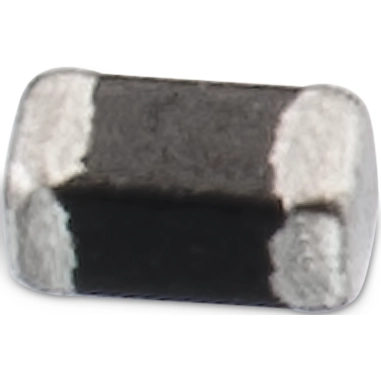
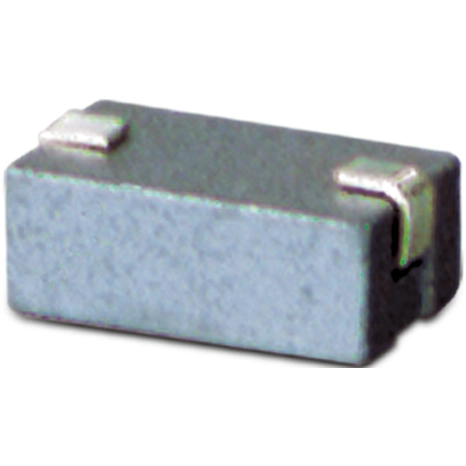
Discover our vast product portfolio:




Inductors in Switching Power Supplies: Why the Coil Determines Efficiency
In switching power supplies, inductors play a central role. They ensure that fast switching pulses are converted into a smooth output voltage. For a circuit to operate reliably, the inductor must be suitable for the operating range. Not only the µH value but, above all, the current and loss parameters are particularly important here.
Typical symptoms of an “incorrect” inductor:
- noticeable heating of the coil or adjacent components
- unstable output voltage or unexpected reset issues
- increased noise/ripple at the output
- EMC issues or audible “coil whine”
Important: In switching power supplies, the correct inductance determines not only functionality but also suitability for mass production.
Energy Storage in the Magnetic Field: Important, but Not Always the Goal
Inductors are often equated with energy storage. However, this is only partially true. In filters, the focus is more on noise suppression, whereas in switching power supplies, energy storage is essential.
Crucial for selection: Energy storage almost always also means current load. And this brings one criterion into particular focus: the saturation current. Because as soon as the core reaches saturation, the effective inductance drops sharply. This leads to increased ripple currents, unstable regulation, and greater thermal stress on components.
Designs and Technologies: Which Inductor Is Right for Which Application?
Inductors differ not only in their value (µH/mH), but also in their design, their core material, and their EMC behavior. To make an informed selection, it is helpful to be familiar with a few categories.
SMD or through-hole?
- SMD inductors are compact, well-suited for automation, and the standard in mass production.
- Through-hole inductors are often more robust and well-suited for prototypes, repairs, and laboratory setups.
Shielded or unshielded?
- Shielded inductors reduce magnetic stray fields and are beneficial in EMC-critical designs.
- Unshielded inductors may be less expensive but generate stronger stray fields.
Core Material and Losses
The core material influences how the inductor behaves at frequency, temperature, and current. For power applications, optimized materials are often used to minimize losses and control saturation. In practice, this means that two inductors with the same µH value can behave quite differently in operation.
Selection Guide: Which Inductor Do I Need and Why?
To use inductors correctly, the following six criteria help with selection:
- Inductance Value (µH/mH)
The inductance value determines how much current changes are smoothed out. It is a starting point—but rarely the only decisive criterion. - Rated current and saturation current
Rated current: The current at which the component remains within safe thermal limits.
Saturation current: The current at which the inductance drops significantly. For switching power supplies, the saturation current is usually the critical value. - DC Resistance (DCR)
A low DCR reduces conduction losses and heating. This improves efficiency, especially at higher currents. - Frequency Response and Losses
Inductors behave differently at high frequencies than at low ones. This is crucial for EMC filters and switching power supplies. - Design and Shielding (EMC)
Shielded variants reduce stray fields and help prevent interference in the layout. - Temperature Range and Reliability
Inductors must be suited to the environment: industrial, automotive, or continuous operation pose different requirements than a laboratory prototype.
Checklist: Selection by Application
Interference suppression/EMC filters
- Focus on suitable frequency response
- Shielding recommended for sensitive areas
- Current rating appropriate for the supply path/rail
Switching power supply (Buck/Boost)
- Saturation current with reserve
- Low DCR for efficiency
- Thermal stability and design suitable for the layout
Energy storage/power applications
- Allow for current and temperature reserves
- Optimize design for low losses
- Do not underestimate EMC aspects
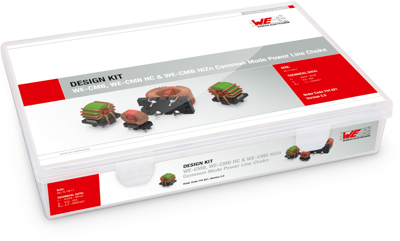
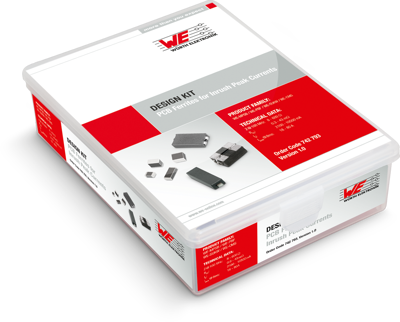
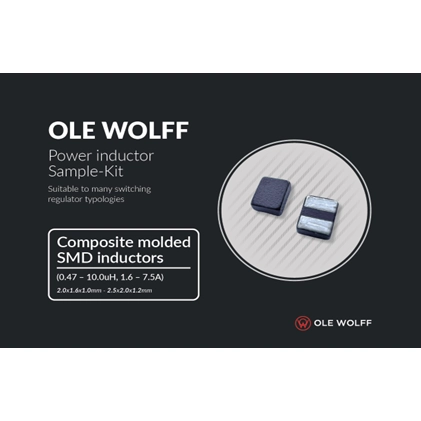
Tip: If you do not want to procure inductors individually, inductor kits can be helpful for development and prototyping, such as for quick tests and comparing variants.

Finding the Right Inductance with the Right Criteria
Inductors perform a wide variety of tasks in circuits. Therefore, it is not only the inductance value in µH that is decisive, but above all the specific application.
Those who consistently tailor their product to the application will quickly find the right inductance and avoid subsequent rework in the layout or during EMC testing. Always reliable support: Bürklin’s extensive range of passive components and inductors.
This might also interest you
-

Understanding Electronics
Galvanic Isolation: Significance and Applications
Galvanic isolation is a key safety and functional principle in electrical engineering and electronics. It ensures that electrical circuits can communicate with one another without direct electrical contact. Especially in...
-
Understanding Electronics
Relays explained: Basics, function, and application
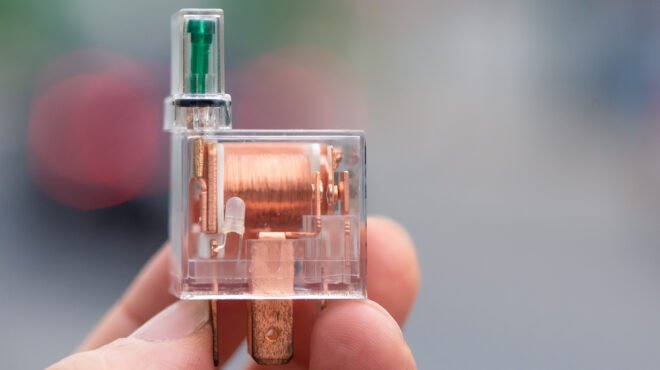
Relays are one of the fundamental components of electrical engineering and automation. They switch, disconnect, and control electrical circuits—often inconspicuous, but technically indispensable. But what exactly is a re...
-
Manufacturing Industry
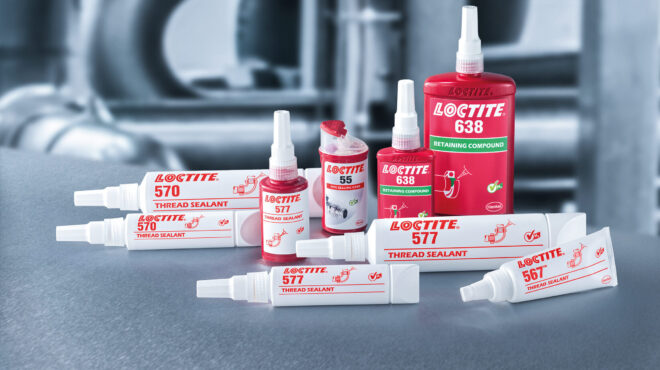
LOCTITE Thread Sealants: Hydrogen-Compatible Solutions for Preventing Hydrogen Gas Leaks
Hydrogen systems are demanding: Due to the extremely small molecular size of hydrogen, even the tiniest gaps in threaded connections can cause leaks, compromising safety, availability, and efficiency. Learn how hydrogen-...