Circular connectors
Signal and power transmission in a compact, robust design
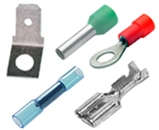
Essentially, connectors establish a detachable connection between wires, cables, circuit boards, and devices. Electrical wires and signal lines are thus reliably connected. Depending on the application, different contact technologies may be used. In addition to the classic connector, cut-to-length connections, crimp connections, screw connections, solder and spring-loaded connections, as well as IDC connections or push-in connections, are also in use.
Criteria such as number of pins, pitch, locking mechanism, and coding are decisive for selection. They determine how compact, mis-insertion-proof, and resilient a connection will be in later use.
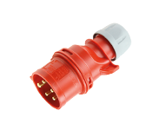
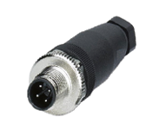
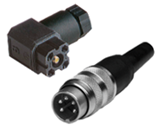
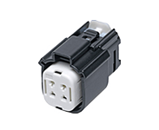
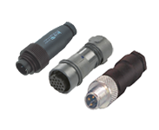
Circular connectors
Signal and power transmission in a compact, robust design
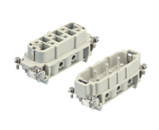
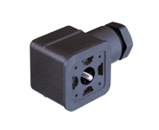
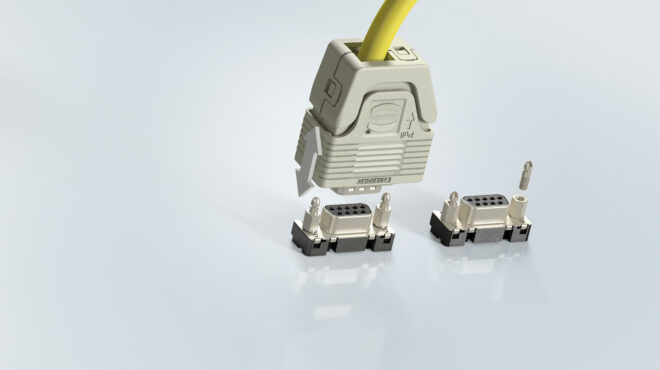
Rectangular connectors
For junction boxes, control cabinets, and modular industrial applications
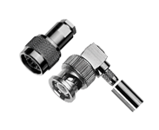
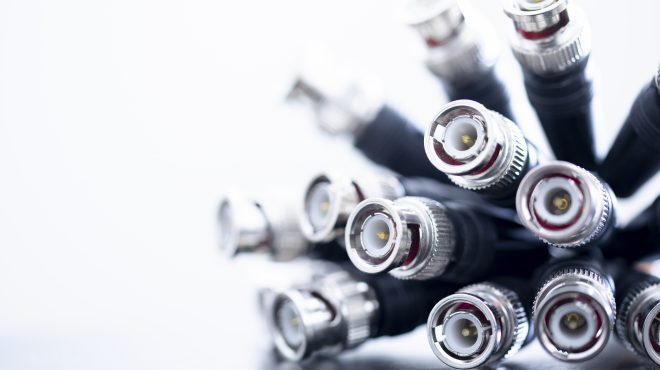
Coaxial connectors (HF)
Defined impedances for high-frequency signal and data transmission
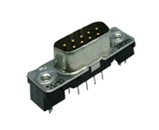
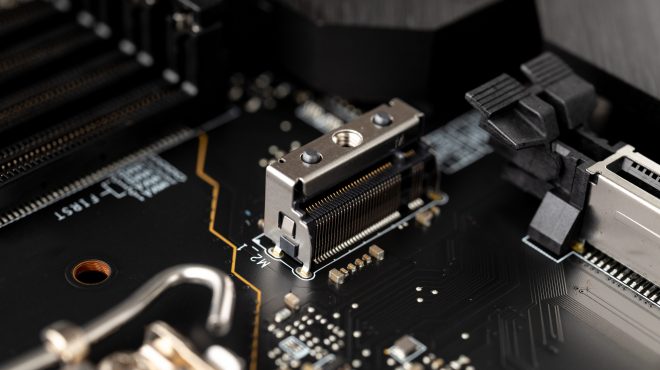
PCB connectors
Connect circuit boards in electronic devices, e.g., wire-to-board.
Miniature connectors
High performance in a small space.
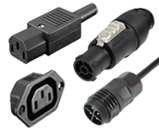
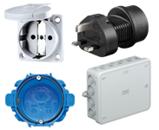
Power connectors
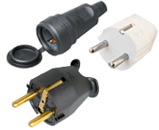
Carry high currents and voltages, e.g., CEE connectors, Schuko.
Data connectors
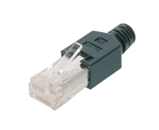
For reliable data transmission, e.g., RJ45 connectors, USB, HDMI.
AV connectors
For audio-video connections with jack plugs, RCA, or XLR.
Not every connector is suitable for every application. The key is making a tailored selection that takes into account both the electrical requirements as well as environmental conditions and assembly processes.
Mechanics & Service Life
Mating cycles, vibration resistance, strain relief, locking mechanism (e.g., screw, bayonet, or push-pull)
Electronic Requirements
Current / voltage and signal type
Environmental Conditions
Temperature range, humidity, dust, chemicals, UV exposure
Shielding & EMC
Especially important for data and signal interfaces
Size & Miniaturization
Space requirements, pitch, installation situation, field handling
Material Selection
Lightweight or robust housing materials (e.g., plastic/metal), corrosion protection, contact material and coating
Modularity
Modular systems facilitate adaptations, service, and expansions (e.g., mixed inserts for signal, data, and power)
Safety & Standards
Comply with current guidelines and legal regulations
Where energy flows, reliable components are needed: Connectors for power supply must safely transmit electrical energy. Durability and protection against external influences are essential. Also crucial are standard-compliant design, robust materials, and reliable contact—so that machines, systems, and devices are well-supplied even under load.
Depending on the application, various solutions are available : from compact device connectors for equipment connections to industrial-grade CEE connectors and cable connectors for flexible installations. For photovoltaic systems or agriculture, UV and weather resistance as well as appropriate protection ratings also play a central role.
To ensure that controllers, sensors and systems work together precisely, connectors are needed that transmit signals and data without interference. In this area, the most important factors are consistent contact quality, proper shielding, and the appropriate design for the required data rate.
In high-frequency applications, for example, coaxial connectors demonstrate their strengths because they support defined impedances and transmit signals with exceptional reliability.
Power connectors are used wherever high currents, voltages, or load cycling must be safely managed, such as in drive and motor technology, in control cabinets, in power distribution, in charging infrastructure, or in photovoltaic and energy storage applications.
What matters most in power applications:
Contact Technology & Environmental Resistance
High‑quality contacts reduce contact resistance and heat generation; corrosion protection, seals, and appropriate protection ratings ensure durability in harsh conditions.
Secure Locking
Against accidental disconnection, especially during vibration or tensile stress.
Touch Protection
To protect users and comply with safety requirements.
Cable Cross‑Sections & Assembly
Appropriate crimp/screw contacts, clear assembly processes, reliable strain relief.
Dust, moisture, cleaning agents, UV radiation, vibrations, or extreme temperatures: In many applications, environmental resistance determines failure risks and maintenance intervals.
Pay particular attention to the following:
Dense Connector Assemblies
With appropriate protection ratings
Robust Housing Materials
Metal or high-quality plastics, corrosion-resistant surfaces
Vibration‑Resistant Locking Mechanisms
e.g., bayonet, screw, push‑pull depending on the application
Kink Protection & Strain Relief
For moving cables
Chemical & UV Resistance
For outdoor areas and harsh environments
The IP protection rating describes how well a product is protected against foreign objects (e.g., contact, dirt, dust) and moisture/water. IP stands for International Protection or Ingress Protection. The rating consists of two digits: the first digit (0–6) for protection against contact and dust, the second digit (0–8) for protection against water and moisture.
Read more in our blog post.| Protection rating | Dust protection | Water protection | Typical application | Protection rating |
|---|---|---|---|---|
| IP40 | Foreign objects > 1 mm | No protection | Dry indoor areas | |
| IP54/55 | Dust-protected | Splash water / jet (low pressure) | Weatherproof, rainproof | |
| IP65 | Dust-tight | Water jets | Outdoor installations | |
| IP67 | Dust-tight | Temporary submersion | Damp / wet environments | |
| IP68 | Dust-tight | Continuous submersion | Continuous underwater applications | |
A good connector is more than just a plug and socket. Only with the right accessories and clean workmanship can a durable, reliable connection be created.
Key components:
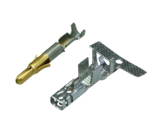
Contacts (Crimp, Screw, IDC)
Suitable for cross‑section and material
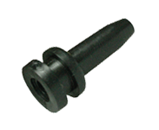
Seals, Grommets, Housings and Caps
For protection and strain relief, adapters
Cables & Wires
To ensure secure connections
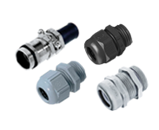
Cable Glands and Kink Protection
For mechanical stability
Tools
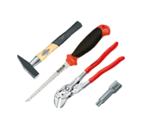
Crimping pliers, wire strippers, testing and release tools, soldering stations, crimping tools
Marking & Coding
For serviceability and prevention of incorrect connections
Many applications can be implemented faster and more reliably when components are considered as a system: coordinated connector families, compatible accessories, and clear specifications simplify selection, installation, and operation.










Often, the right combination of design, material, and protection rating determines the reliability of your application. With our services, we support you from the initial selection through to long-term supply assurance.
Technical support
Together, we identify individually tailored connector solutions
Simple ordering process
With the convenient filtering in the Bürklin online shop, you can find your desired product with just a few clicks.
Ready for use quickly
We guarantee immediate delivery for in-stock items.
Want to dive deeper? In our Knowledge Hub, you’ll find helpful content on the selection, processing, and application of connectors, including foundational articles, practical tips, and thematically relevant product categories.