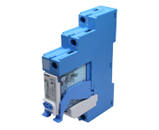
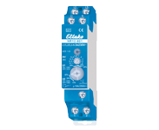
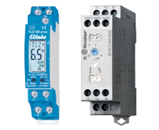
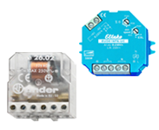
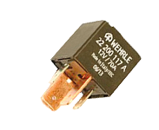


Relays: Controlling Signals, Safely Switching Loads
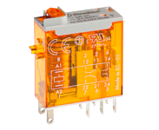
Relays play a crucial role wherever electrical signals need to be safely switched, isolated, or transmitted. In electromechanics, they are used in control systems, machinery, building services, and industrial plants because they can reliably isolate load circuits from control circuits. This also makes them useful when small control signals need to trigger larger loads.
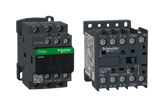
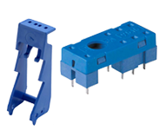
Depending on the application, various designs are available, ranging from compact relays for control cabinets to higher-performance solutions for higher currents. For larger loads and motors, contactors are an important addition, while suitable accessories assist with installation and expansion.
When do you need a relay?
Relays are used when load and control circuits need to be separated from one another or when signals need to be safely transmitted to different voltage and current ranges. Typical applications include control panel construction, machine control, building automation, and industrial process control.
What are the disadvantages of relays?
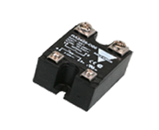
Classic electromechanical relays operate with moving contacts and are therefore subject to a certain amount of wear. Compared to solid-state relays, they switch more slowly and are often less suitable for very high switching frequencies.
What are contactors used for?
Contactors are designed for switching higher loads and are frequently used with motors, heaters, or other high-power loads. This distinguishes them from many traditional relays, which are typically used for control and signal circuits.
In the Bürklin online shop, you’ll find a wide selection of relays, including those from manufacturers such as Finder. Choosing the right relay is crucial, especially when there are specific requirements regarding switching behaviour, load isolation, or installation conditions. We support you with expert advice and help you select the right relays for your application.