
What is an Operational Amplifier – and how is it Used?
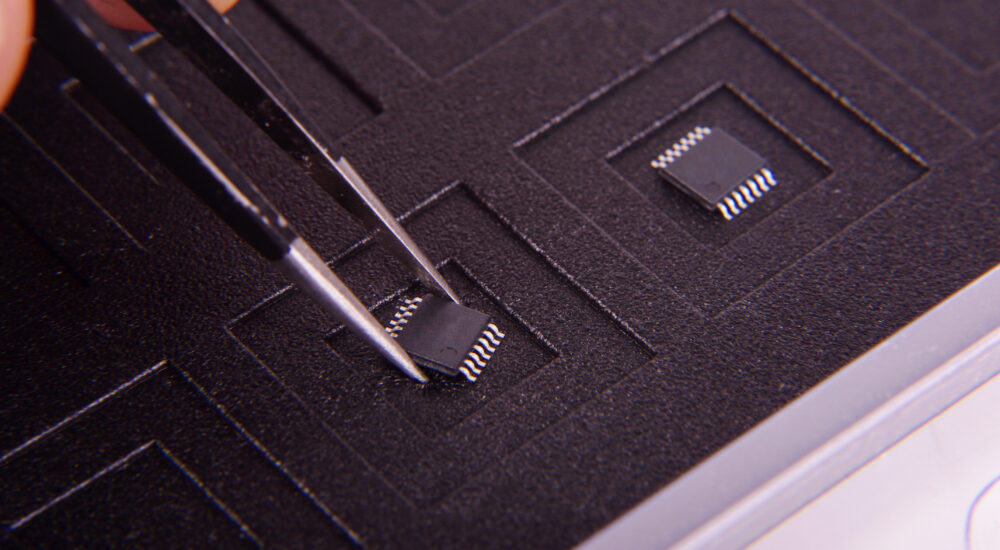
Operational amplifiers (Op-Amps or OPVs for short) are among the most important components in analog technology. When used correctly, they amplify, filter, or combine electrical signals – and thus perform tasks that you will constantly encounter in measurement and sensor circuits, audio devices, or industrial control technology.
Table of contents
- What is an operational amplifier?
- Ideal behavior vs. reality
- The most important basic OPV circuits
- Typical areas of application for operational amplifiers
- Important OPV types and designs
- What to look for when buying operational amplifiers?
- Choose reliable, high-quality manufacturers
- Operational amplifiers: small components, big impact
What is an operational amplifier?
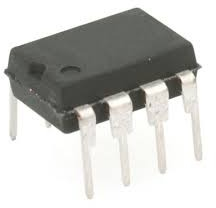
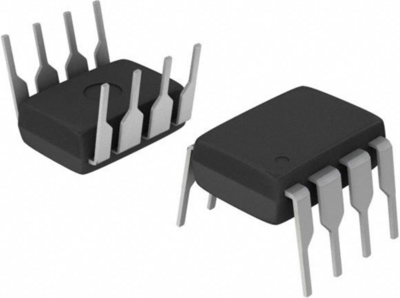
An operational amplifier is an integrated electronic amplifier that processes voltages. Its core task is to amplify the difference between two input voltages.
A classic OP amp has three central connections:
- a non-inverting input (+)
- an inverting input (–)
- an output
In addition, there are the supply voltages (V+ / V-). The amplifier compares the voltages at the two inputs and amplifies their difference by a very high factor. In practice, this amplification factor is specifically adjusted using external components – usually resistors, capacitors, or diodes.
In this article, we explain in an easy-to-understand way how operational amplifiers work, which basic circuits are typical, and how to select a suitable OPV.


Ideal behavior vs. reality
Basic textbooks often use the ideal OPV for calculations. This is useful because it greatly simplifies circuit analysis. In reality, however, there is no such thing as an ideal OPV.
The following parameters are particularly important in practice:
- Offset voltage: Small input difference that can be visible as an error at the output.
- Bandwidth / gain-bandwidth product (GBW): Determines the frequency up to which a desired gain can be reasonably achieved.
- Slew rate: Indicates how quickly the output can follow a voltage change.
Our online shop offers a wide range of semiconductors with extremely high efficiency: relays, optocouplers, thyristors, and diodes of all kinds. Whether you are looking for tried-and-tested classics or innovative new products, we work with our partner manufacturers to offer you a wide selection of electronic components for your l project.
Discover our entire semiconductor portfolio from renowned manufacturers:
The most important basic OPV circuits
Operational amplifiers only reach their full potential when connected correctly. The most important basic circuits include:
Inverting amplifier
In this case, the operational amplifier is operated with parallel voltage negative feedback. Part of the output voltage is fed back to the negative input (-) of the OPV via the resistor. In this case, the input voltage is applied to the negative input of the operational amplifier via the resistor. The non-inverting input (+) is then connected to ground (either directly or via a resistor).
The disadvantage is a relatively low input resistance. The advantage, on the other hand, is that it can be actively attenuated in some cases, allowing even high voltages to be measured accurately.
Non-inverting amplifier
In contrast to the inverting amplifier, the non-inverting amplifier is a series voltage feed-back amplifier. The input and output signals are in synchronous phase. The non-inverting input (+) is connected to the input signal and the output is fed back to the inverting input (-). The change in output voltage counteracts the change in input voltage.
The result: a very small voltage value. Non-inverting amplifiers are designed for very high input resistances and very low output resistances (impedance converters, AC voltage amplifiers, high-impedance voltmeters, DC voltage sources).
Voltage follower
A special case of the non-inverting amplifier with a gain of 1. The voltage follower serves as an impedance converter and decouples signal sources from subsequent circuits. This circuit has a high-impedance input resistance and a negligible output resistance.
Important for practical application: The inputs of the circuit load the signal sources. This can lead to measurement or calculation errors if the sources have too high an impedance. Remedial measures:
- low-impedance signal sources, e.g., upstream, negative feedback OPV stages) or
- impedance converters (buffers/voltage followers) before the inputs if the signal sources are high-impedance.
Summing amplifier
A summing amplifier is an OPV circuit that can add signals together. It is based on the principle of the inverting amplifier – with one crucial difference: the input current is supplied not only by one, but by two different signal sources.
The currents from the individual inputs converge at the summing node, add up and are then – as with the inverting amplifier – converted into an amplified output voltage via the feedback.
Typical areas of application for operational amplifiers
Operational amplifiers can be found in almost all areas where signals need to be amplified or processed. When connected correctly, OPVs not only perform amplification tasks, but can also integrate or switch signals, add and subtract voltages – in other words, perform basic arithmetic operations in analog technology.
This means that they continue to be in high demand in the field of digitalization. Nevertheless, the role of OPVs has changed somewhat. Today, they are considered valuable aids for signal processing, as their range of applications has been limited by various software control options.
Typical applications are:
- Control technology: As power amplifiers, OPVs can serve as actuators, for example to control motors.
- Measurement technology: In measurement setups, OPVs perform functions such as a constant current source, for example for temperature compensation.
- Analog control technology: In analog control circuits, OPVs are used in classic control concepts such as PID controllers, among other things.
- Sensor technology: For sensor applications, OPVs are used, for example, as current-voltage converters to process and transmit signals with low loss.
- Audio technology: OPVs are used for low-noise microphone amplifiers, multi-stage preamplifiers, and power amplifiers.
An additional practical advantage: OPVs are considered cost-effective components for signal amplification and are therefore widely used in both industrial applications and high-quality audio systems and are available in large quantities.
Important OPV types and designs
Different operational amplifiers are used depending on the application:
Standard operational amplifiers / general-purpose operational amplifiers
Universally applicable for many classic applications. They are cost-effective and available in large quantities.
Precision operational amplifiers
Precision operational amplifiers are characterized by extremely low offset voltage, very low offset drift, and minimal input bias current. At the same time, they offer a balanced ratio of bandwidth, noise, and power consumption.
Rail-to-rail operational amplifiers
These OPVs can drive input and output voltages close to the supply rails. They are particularly relevant for low supply voltages.
High-speed operational amplifiers
High-speed OPVs can process extremely fast signals, as evidenced by their high bandwidth (often 50 MHz to several GHz) and slew rate. The goal: to serve high-frequency applications in communications, measurement technology, and image processing, where standard OPVs reach their limits.
What to look for when buying operational amplifiers?
In practice, there is no such thing as the “ideal” operational amplifier. That’s why it’s worth taking a quick look at the general conditions of your application before making a selection – this will help you avoid surprises later on in testing or in the field.
Design and type
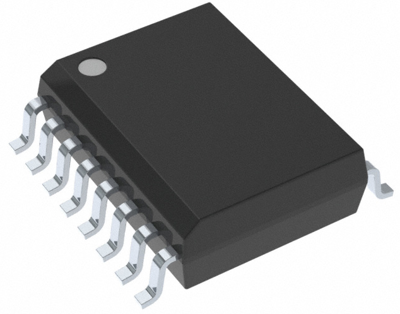
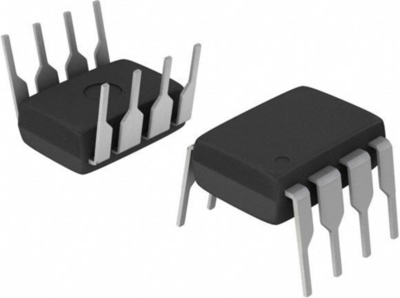
First and foremost, it is important to be clear about which housing type, mounting type, and design type are relevant for your application. Practical: In the Bürklin online shop, you can filter the key parameters as required – and only the products relevant to you will be displayed.
Browse through our operation amplifiers portfolio
Temperature range and stability in use
Performance data can change with temperature fluctuations. Therefore, pay attention to the minimum and maximum operating temperatures specified by the manufacturer. This will ensure that the OPV works reliably in your intended environment – without any noticeable loss of performance.
Noise
Even though OPV signals are generally considered to be low-noise, interference can occur. Offset voltage plays an important role here: it is particularly noticeable when there is no input signal.
This effect becomes more important
- the higher the amplification you want or
- the greater the required bandwidth.
Note: It is therefore essential to take noise and offset into account when it comes to precise measurements, clean audio paths, or fast signals.
Choose reliable, high-quality manufacturers
The reasons for choosing reliable products are obvious: high reliability, long life cycles, less maintenance – and thus savings in time and money. At Bürklin, you will find hand-picked manufacturers who meet our high standards of quality and reliability.
Operational amplifiers: small components, big impact
Operational amplifiers are indispensable in modern electronics. They enable precise signal processing, flexible circuit designs, and reliable measurement results. Whether for a beginner’s project or an industrial application, anyone who understands the basic principle can use OPVs in a targeted and efficient manner.
With the right know-how and high-quality components, you can create the basis for stable, powerful circuits – today and in future projects.
Operational amplifiers at Bürklin Elektronik
The Bürklin range includes operational amplifiers for almost every application – from standard types to precision OPVs and high-speed variants. Bürklin also offers matching resistors, capacitors, power supplies, measuring devices, and development accessories for the safe construction and testing of circuits.
This might also interest you
-
Understanding Electronics
How to Use Inductors Correctly: From Interference Suppression to Energy Storage
Inductors are among the most important passive components in modern circuits. They significantly influence their efficiency, EMC behavior, and thermal stability. Nevertheless, they are often selected “as an afterthought....
-

Understanding Electronics
Galvanic Isolation: Significance and Applications
Galvanic isolation is a key safety and functional principle in electrical engineering and electronics. It ensures that electrical circuits can communicate with one another without direct electrical contact. Especially in...
-
Understanding Electronics
Relays explained: Basics, function, and application
Relays are one of the fundamental components of electrical engineering and automation. They switch, disconnect, and control electrical circuits—often inconspicuous, but technically indispensable. But what exactly is a re...