
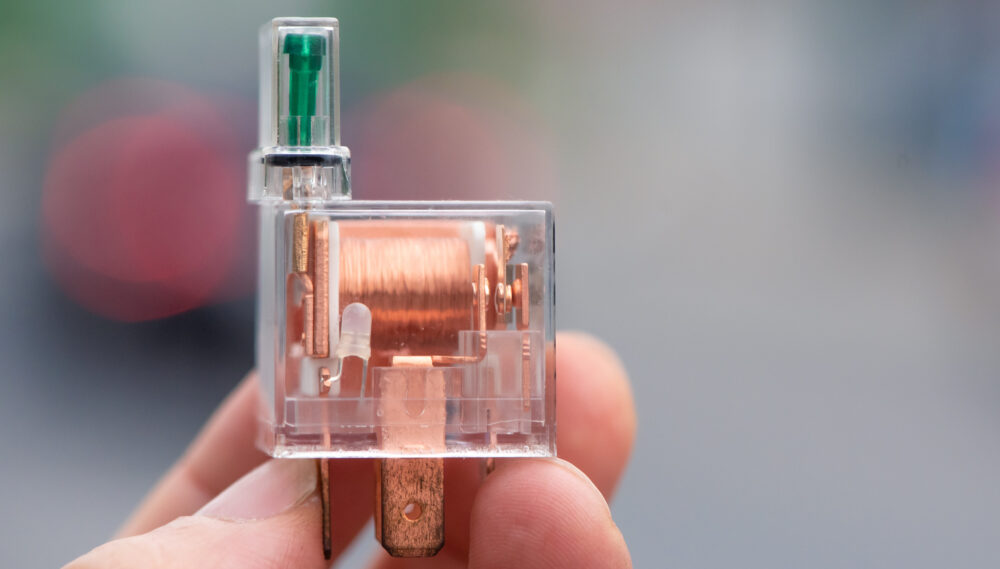
Relays explained: Basics, function, and application
Relays are one of the fundamental components of electrical engineering and automation. They switch, disconnect, and control electrical circuits—often inconspicuous, but technically indispensable. But what exactly is a relay, how does it work, and why are relays used in so many industrial applications?
What is a relay?
Basically, a relay is an electrical switch. Electrical circuits can be switched on, off, or changed using this compact component – as required. The relay was invented by the American Joseph Henry, providing a practical solution for many areas of application; more on that later. In addition to electromagnetic circuits, there are now also electromechanical models. The design and components are always similar.

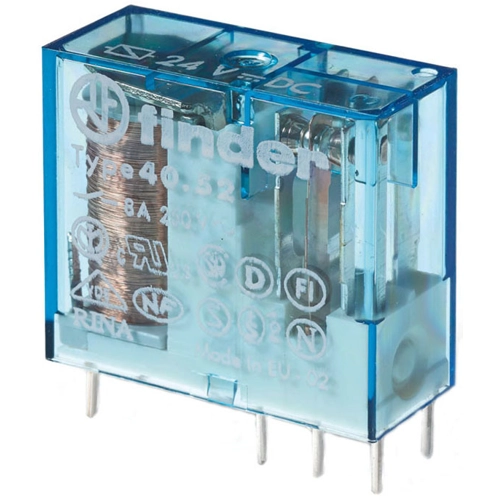

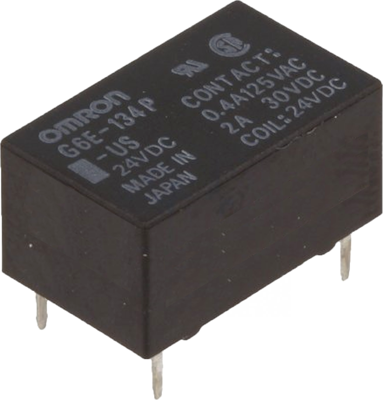

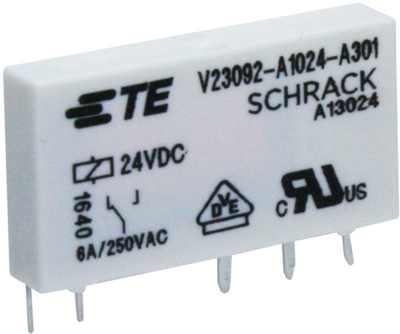

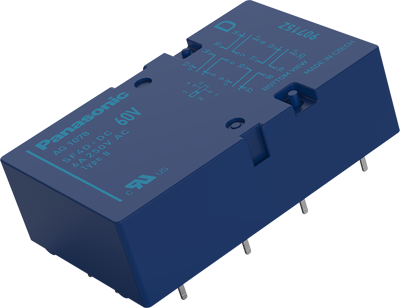
How is a relay constructed?
The typical components of a relay are:
- Coil with iron core
- Ferromagnetic armature
- Contact springs
- Normally closed contacts (NC contacts)
- Normally open contacts (NO contacts)
How does a relay work?
The classic functioning of a relay can be summarized as follows:
- Electricity is fed through the coil.
- The coil generates a magnetic field.
- This attracts the ferromagnetic armature.
- The two contacts are attracted, the normally open contacts are closed.
- When the voltage is removed, the armature returns to its initial position.
Note: When the magnetic field is created, it is possible that the normally closed contacts open, depending on the relay design. In the case of changeover contacts or changeover relays, combinations of normally open and normally closed contacts are also used.
What types of relays are there?
Relays differ in terms of design, size, type or material of the contacts, operating principle, switching capacity, number of possible switching states, and area of application.
The most common types of relays:
- Bistable relays (e.g., support relays, load relays)
- Semiconductor relays / PCB relays
- Coupling relays
- Industrial relays / power relays
- Monitoring relays / signal relays
- PhotoMOS relays
- Time relays
- Reed relays
- Coaxial relays
- Automotive relays
- Inrush switches & dimmers
- Contactors
Where are they used?
Relays are indispensable in industry, building technology, and electronics. Their most common application is certainly in their function as remote-controlled switching amplifiers. In addition, relays are also used to create galvanic isolation.
Typical areas of application:
- Automation and control technology
- Machine and plant engineering
- Energy and building technology
- Automotive applications (interval relays, fuel injection relays, glow time relays, flasher relays)
- Measurement and control technology
Relays are used wherever signals need to be safely isolated or loads need to be switched.
Advantages and limitations
| Advantages | Disadvantages |
|---|---|
| Price-performance ratio: inexpensive despite rising raw material prices | Sensitive to vibrations and shocks |
| Installation: easy to install in existing circuits | Noise: load when switching the relays |
| Robust: voltage and current peak compatibility | Limited insulation capacity |
| Areas of application: potential-free isolation from the load circuit | Low speed: high response and decay times |
| Low heat generation: no cooling necessary | Risk of wear on mechanical and electrical components |
| Versatile: from low signals to high-frequency power | |
| Practical: switching status can be detected at any time |
What should you consider when purchasing relays?
Step-by-step instructions and decision-making aid for your relay purchase:
- Planning & sketching the switching device
- Clearly define the purpose and task of the relay(s)
- Visit the relevant online shop
- Set filters as required
- Check the main parameters
- Select the product and complete the purchase
What are the main parameters to consider when buying a relay?
The following parameters should be checked carefully before purchasing:
- Nominal operating voltage of the coil
- Dropout voltage
- Coil current and resistance
- Pull-in voltage
- Response and release time
- Switching frequency
Tip: Put your trust in reputable relay manufacturers. After all, experience and expertise guarantee durability and product service. This is also what Bürklin stands for with its numerous manufacturing partners.
Accessories
From A for covers to F for function modules and M for magnetic coils to Z for time blocks: Bürklin offers you the perfect additions to your relay components – high-quality, robust, and reliable.
Relays as indispensable switching elements
Relays are among the central components of modern electrical engineering. They connect simple control signals with powerful applications and ensure safety, flexibility, and control. Whether in industry, in control cabinets, or in building technology, relays make a decisive contribution to the reliable functioning of electrical systems in the background.
At Bürklin, you will find a large selection of high-quality relays from our quality-oriented manufacturing partners. Simply filter according to your requirements and preferences—in just a few clicks, your order will be on its way to you.
This might also interest you
-
Understanding Electronics
How to Use Inductors Correctly: From Interference Suppression to Energy Storage
Inductors are among the most important passive components in modern circuits. They significantly influence their efficiency, EMC behavior, and thermal stability. Nevertheless, they are often selected “as an afterthought....
-

Understanding Electronics
Galvanic Isolation: Significance and Applications
Galvanic isolation is a key safety and functional principle in electrical engineering and electronics. It ensures that electrical circuits can communicate with one another without direct electrical contact. Especially in...
-

Manufacturing Industry
LOCTITE Thread Sealants: Hydrogen-Compatible Solutions for Preventing Hydrogen Gas Leaks
Hydrogen systems are demanding: Due to the extremely small molecular size of hydrogen, even the tiniest gaps in threaded connections can cause leaks, compromising safety, availability, and efficiency. Learn how hydrogen-...