
From Prototype to Series Production: Choosing the Right Microcontroller
In electronics development, choosing the right microcontroller is crucial, not only for the initial prototype but also for subsequent series production. From defining technological requirements and prototyping platforms to scaling and series production readiness: A well-informed selection saves time, costs, and development risks. In this article, we explain how to evaluate microcontrollers effectively, what classes of MCUs exist, and what you should consider when transitioning from prototype to series production.
Table of contents
- Basics Explained: What Is a Microcontroller?
- Definition: Microcontroller vs. Microprocessor
- Prototype or Production Run? Why the MCU Selection Must Cover Both
- Prototyping: Test quickly, stay flexible
- Comparison of Typical MCU Classes
- From Proof-of-Concept to Series Production: Planning Scaling Correctly
- Practical Check: Is your microcontroller underpowered?
- From prototype to series production with clear criteria
Basics Explained: What Is a Microcontroller?
A microcontroller (MCU) is an integrated embedded computer on a single chip. It combines the following components:
- a central processing unit (CPU)
- memory (Flash and RAM)
- Peripheral functions such as timers, ADCs, and interfaces (SPI, I²C, UART)
- Control and communication modules
Unlike a microprocessor, a microcontroller typically contains everything needed for embedded applications in a single component. This makes it ideal for microcontroller projects in the fields of industry, automotive, consumer electronics, or hobby applications.
In short: A microcontroller controls electrical systems, reads sensors, switches actuators, or communicates over networks. Anyone looking to develop a device that measures, switches, or controls something is therefore usually well-served by an MCU.
Definition: Microcontroller vs. Microprocessor
Microcontroller (MCU): “Computer on a chip” with CPU, memory, and peripherals (e.g., interfaces) – ideal for controlling, measuring, and regulating in embedded systems
Microprocessor (MPU): High-performance computing unit, usually with external memory and often with an operating system – suitable for complex applications such as Linux-based systems
Prototype or Production Run? Why the MCU Selection Must Cover Both
A prototype is primarily intended to deliver insights quickly. At the same time, the early selection of a microcontroller often determines how smoothly the transition to production will go later on. Those who consider key production requirements as early as the development phase save time, costs, and redesigns.
Prototyping: Test quickly, stay flexible
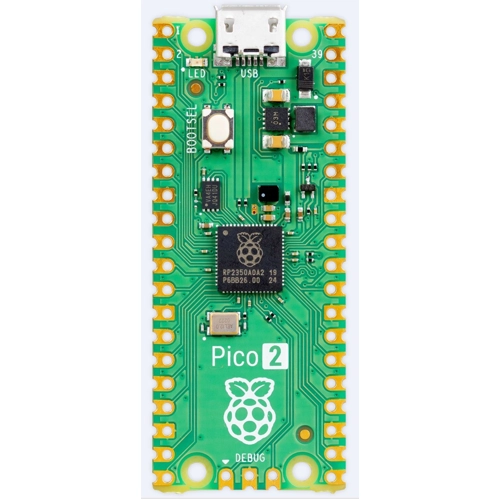
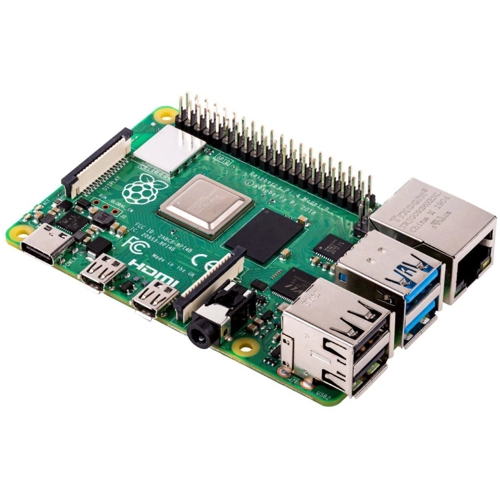
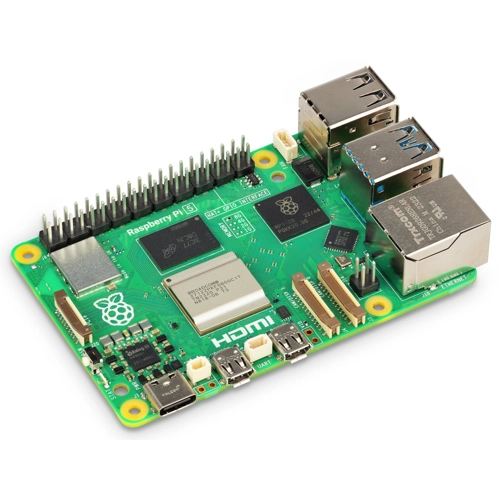
Prototyping is all about validating concepts and functions quickly. Do the sensors respond correctly? Does the control logic work? For this reason, single-board MCU boards such as Arduino or Raspberry Pi Pico are often ideal. These boards are ideal especially for initial proof-of-concept phases because they offer ready-made hardware, broad community support, and many software examples.
Good to know: At Bürklin, you’ll find numerous suitable components, development kits, and accessories to get started with microcontroller prototyping.
Discover our development kits Discover our accessories for prototyping


Consider series production right from the prototype stage
A classic mistake in electronics projects is to use a cheap, simple board for the prototype and then switch to a different MCU type later in series production. This discontinuity leads to duplicated development work and avoidable risks.
Therefore, define production-relevant criteria early on that should be taken into account in the prototype. These include long-term availability, price and delivery stability, certified components, and industrial specifications.
1. Define functional requirements
First, you should technically define what the microcontroller must be capable of:
- Which inputs and outputs are required?
- Which sensors and actuators should be connected?
- Does the system require real-time processing or simple control logic?
- Which communication interfaces are needed (e.g., CAN, SPI, I²C, USB)?
The more precisely these requirements are defined, the more accurately the appropriate MCU type can be selected.
2. Architecture and Power Requirements
MCUs are available in various architectures and bit widths. For simple control and measurement tasks, an 8- or 16-bit microcontroller is often sufficient. More demanding tasks, such as complex communication stacks or signal processing, usually require 32-bit MCUs with higher processing power and more memory.
3. Energy Efficiency and Operating Conditions
Many projects operate in battery-powered or autonomous environments. In such cases, power consumption, sleep modes, and thermal characteristics play a major role. Industrial applications also often require extended temperature ranges and robustness factors.
4. Development Environment and Software Ecosystem
A strong software ecosystem and good development tools significantly accelerate product development. Important factors include:
- Availability of IDEs and debugging tools
- Extensive libraries
- Community support, tutorials, and examples
Practical: Platforms such as Arduino or ARM-based frameworks stand out due to their particularly broad support.
5. Availability, Costs, and Mass Production Scaling
For mass production, unit price, supply capacity, and lifecycle stability are decisive. Components that are only available for a short time can quickly lead to bottlenecks in production.
Comparison of Typical MCU Classes
Depending on the application, there are different MCU classes that vary in performance, price, and complexity.
MCU Development Boards for Makers and Prototyping
Arduino platforms are a classic entry point: affordable, easy to program, and quickly expandable through tutorials and shields. The Raspberry Pi Pico is based on a modern 32-bit ARM Cortex-M architecture and offers high flexibility in both hobby and industrial environments. Such boards are ideal for prototypes where speed and easy integration are paramount.
Industrial MCU families
For mass production, developers often turn to ARM Cortex-M-based MCUs. These offer a wide range of peripherals, good tool support, and industrial specifications. Examples include STM32, NXP, or Microchip families. Other architectures such as PIC or AVR also play a role in specific segments, for example in particularly low-cost or highly power-efficient solutions.
MCU vs. Microprocessor
For simple control or regulation tasks, microcontrollers are usually the most efficient solution. However, when complex data processing, an operating system, or multimedia are the primary focus, microprocessors are used. These offer higher computing power but require additional components for memory and peripherals.
From Proof-of-Concept to Series Production: Planning Scaling Correctly
The transition from prototype to production-ready design requires solid planning across multiple dimensions:
Technical Scaling
A prototype should not be optimized down to the last byte. Rather, it is advisable to plan for resource buffers to accommodate future functional expansions. You should also ensure a portable software architecture so that you can quickly switch to MCU families with similar peripherals and toolchains if necessary.
Design for Manufacturing (DFx)
Areas such as Design for Testability (DFT) or Design for Manufacturability (DFM) influence the selection of MCUs and peripherals. Production processes must be debugged and tested. This requires suitable access points and standardized component packages.
Supply Chain and Future-Proofing
Component end-of-life (EOL) is a real risk. Choose MCU families that are supported long-term and for which successor products are available. This ensures production capability throughout your product’s entire lifecycle.
Practical Check: Is your microcontroller underpowered?
Typical warning signs:
- Flash/RAM becomes insufficient as soon as new functions are added (e.g., logging, update functions, security)
- Communication becomes unstable when multiple interfaces are active simultaneously
- Timing issues arise, for example with PWM, sensor polling, or real-time processing
- Debugging becomes tedious because there are hardly any resources left for proper logging
- CPU load increases continuously
- Minor changes suddenly cause new errors
From prototype to series production with clear criteria
Selecting the right microcontroller for prototypes is far more than just a technical gimmick. It forms the foundation for subsequent series development. A clearly defined requirements analysis, a well-thought-out prototyping concept, and early consideration of suitability for series production save development time and costs.
With a structured list of criteria and an eye toward availability, software support, and industrial requirements, robust, scalable solutions can be developed that efficiently navigate the path from initial concept to series production. Throughout the entire process, Bürklin supports you with a comprehensive range of products in the field of microcontroller development.
Also interesting on this topic:
Raspberry Pi: Significance & Functions Semiconductors: Definition & Basics
This might also interest you
-
Understanding Electronics
How to Use Inductors Correctly: From Interference Suppression to Energy Storage
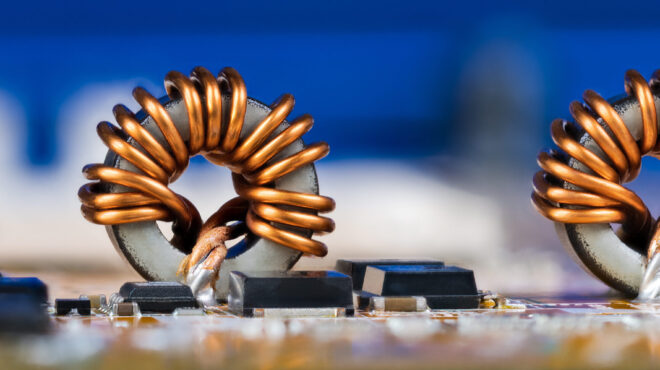
Inductors are among the most important passive components in modern circuits. They significantly influence their efficiency, EMC behavior, and thermal stability. Nevertheless, they are often selected “as an afterthought....
-

Understanding Electronics
Galvanic Isolation: Significance and Applications
Galvanic isolation is a key safety and functional principle in electrical engineering and electronics. It ensures that electrical circuits can communicate with one another without direct electrical contact. Especially in...
-
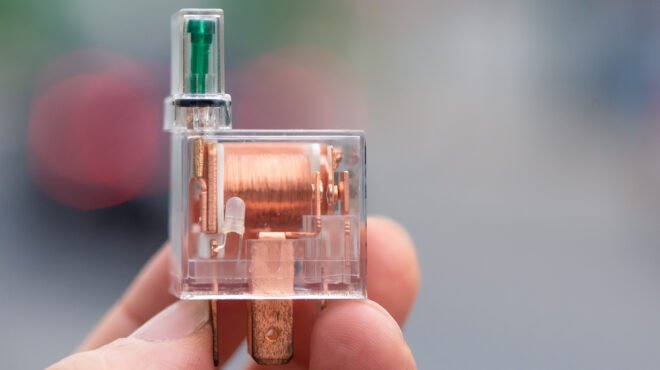
Understanding Electronics
Relays explained: Basics, function, and application
Relays are one of the fundamental components of electrical engineering and automation. They switch, disconnect, and control electrical circuits—often inconspicuous, but technically indispensable. But what exactly is a re...