
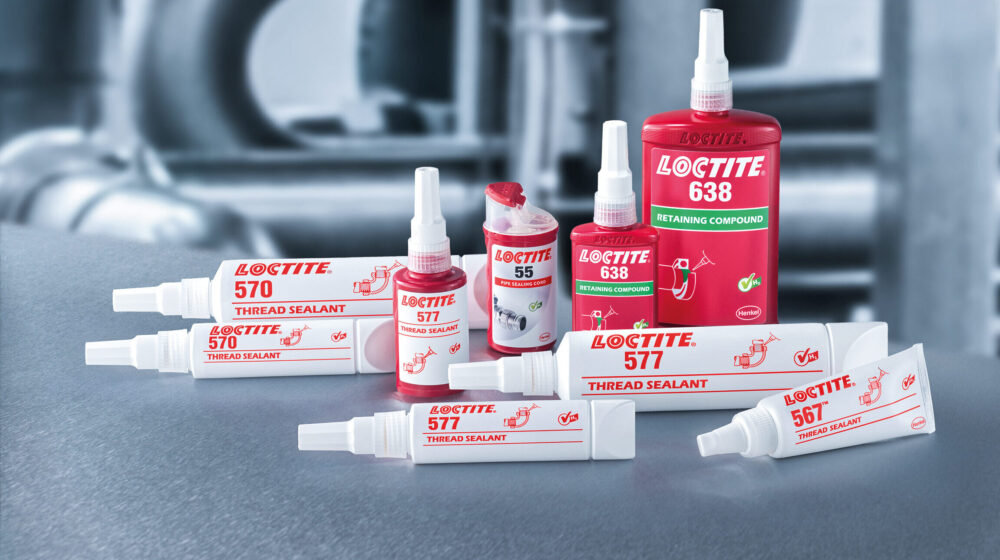
LOCTITE Thread Sealants: Hydrogen-Compatible Solutions for Preventing Hydrogen Gas Leaks
Hydrogen systems are demanding: Due to the extremely small molecular size of hydrogen, even the tiniest gaps in threaded connections can cause leaks, compromising safety, availability, and efficiency. Learn how hydrogen-compatible thread sealing solutions work, what to consider when selecting the right product, and how to apply LOCTITE 55, LOCTITE 567, and LOCTITE 577 effectively.
Table of contents
- Why hydrogen makes sealing difficult
- Typical Applications of Thread Sealants in Hydrogen Systems
- Overview of Hydrogen-Compatible LOCTITE Thread Sealants
- Benefits of LOCTITE Thread Sealants in Hydrogen Applications
- Selection Guide: Which LOCTITE Thread Sealant Fits Which Application?
- Practical Checklist for Leak-Tight Threaded Connections in Hydrogen Systems
- LOCTITE Thread Sealants as a Key Building Block for Leak-Tight Hydrogen Systems
Why hydrogen makes sealing difficult
Although threaded connections are sometimes deliberately avoided in hydrogen installations, they are still widely used in practice. In many applications, they are unavoidable—for example in sensors, valves, service interfaces, or modular assemblies.
Typical challenges in hydrogen applications include:
- High leak risk due to small molecules: Even very small leak paths can allow hydrogen to escape.
- Pressure and load cycling: Many systems operate under dynamic pressure profiles, which can cause mechanical movement in connections.
- Vibration and shock, for example in compressors, pumps, or mobile applications.
- Mixed materials: Stainless steel, steel, brass, aluminum, and coated surfaces require sealing solutions that perform reliably across different metals.
This is where hydrogen-compatible thread sealants come into play: They fill gaps within the threads, enhance sealing performance, and help prevent loosening caused by vibration.
Typical Applications of Thread Sealants in Hydrogen Systems
Hydrogen-compatible thread sealants are suitable for devices and components across many parts of the hydrogen ecosystem, including:
- Valves
- Compressors
- Pumps
- Pressure sensors and measuring instruments
- Electrolyzers
- Storage systems
- Refueling stations and fueling technology
- Piping and pipe connections
- Fuel cell applications
- Household appliances and thermal systems, depending on design
Overview of Hydrogen-Compatible LOCTITE Thread Sealants
LOCTITE offers thread sealants designed to meet the specific requirements of hydrogen environments and capable of complying with KIWA GASTEC QA AR 214 requirements for blends up to 100% hydrogen gas.
Especially noteworthy: These solutions are suitable for NPT and BSPT threads. NPT and BSPT are tapered pipe thread standards that seal via flank interference and therefore require a suitable thread sealant to close microscopic leak paths.

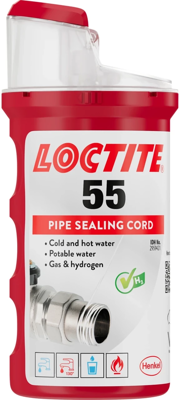
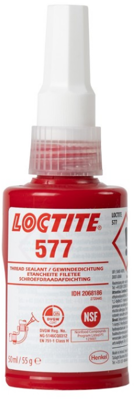
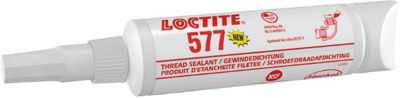
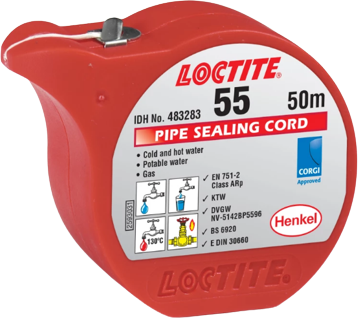
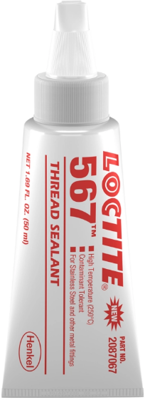
Comparison: LOCTITE 55 vs LOCTITE 567 vs LOCTITE 577
| Product | Type | Short Profile | Suitable Thread Types |
| LOCTITE 55 | Non-curing thread sealing cord | Immediate sealing at full pressure, adjustable after assembly, clean and fast application | BSPT and NPT |
| LOCTITE 567 | Anaerobic curing thread sealant paste, high viscosity | Immediate sealing at low pressures, seals and secures metal threads, removable | NPT |
| LOCTITE 577 | Anaerobic curing thread sealant paste, high viscosity | Immediate sealing at low pressures, thixotropic, chemical resistant, removable | BSPT and NPT |
Anaerobic curing means the material hardens in the absence of air and in contact with metal.
Benefits of LOCTITE Thread Sealants in Hydrogen Applications
1. Increased Safety and Reliability
These sealing solutions are designed to prevent hydrogen gas leaks and support reliable, long-term system performance. This is particularly important where tightness is not just a quality feature but a key element of safety concepts and availability targets.
2. High Assembly Compatibility
Thread sealants for hydrogen systems are suitable for threads made from all types of metals, including difficult-to-seal stainless steel. This simplifies standardization across product variants, especially when different materials appear in a single bill of materials.
3. Improved System Efficiency and Reduced Maintenance Effort
By preventing leaks and vibration-induced loosening, system efficiency can be increased. In practice, this often means:
- Less rework during commissioning and leak testing
- Reduced unplanned downtime
- Fewer complaints and lower warranty costs
4. Clean Application and Fewer Typical Sources of Error
Compared to PTFE tape or conventional sealing compounds, LOCTITE thread sealants offer several advantages:
- LOCTITE 55 does not tear like tape and allows adjustment without leakage.
- LOCTITE 567 and LOCTITE 577 do not shrink like some sealants and remain in place thanks to their high viscosity and thixotropic properties instead of running off.
Selection Guide: Which LOCTITE Thread Sealant Fits Which Application?
LOCTITE 55 – Instant Sealing with the Option to Readjust
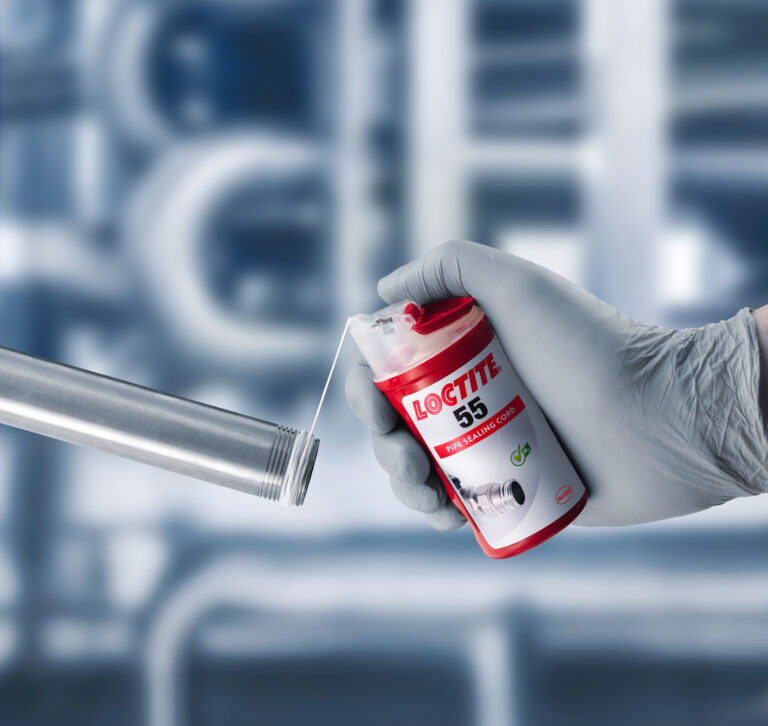
LOCTITE 55 is a white, non-curing thread sealing cord. It seals immediately at full pressure and is ideal when connections need to be aligned or adjusted during assembly without compromising sealing performance.
Key benefits:
- Fast assembly with no curing time
- Allows readjustment, for example to correctly align components
- Suitable for BSPT and NPT pipe threads
- Clean, controlled application without typical issues such as tape tearing
- Meets the requirements of KIWA GASTEC QA AR 214 for hydrogen gas mixtures containing up to 100% hydrogen gas. Certifications are available in selected countries.
LOCTITE 567 – For NPT Metal Threads When Sealing and Locking Are Required
LOCTITE 567 is a white, high-viscosity anaerobic thread sealant paste. It provides immediate sealing at low pressures while also securing metal threads against vibration-induced loosening. Connections generally remain removable.
Key advantages:
- Ideal when sealing and securing metal pipe threads and fittings
- Robust solution for industrial pipe joints
- Specifically suited for NPT pipe threads
- Meets the requirements of KIWA GASTEC QA AR 214 for hydrogen gas mixtures containing up to 100% hydrogen gas. Certifications are available in selected countries.
LOCTITE 577 – Versatile for BSPT and NPT, Non-Drip and Chemical Resistant
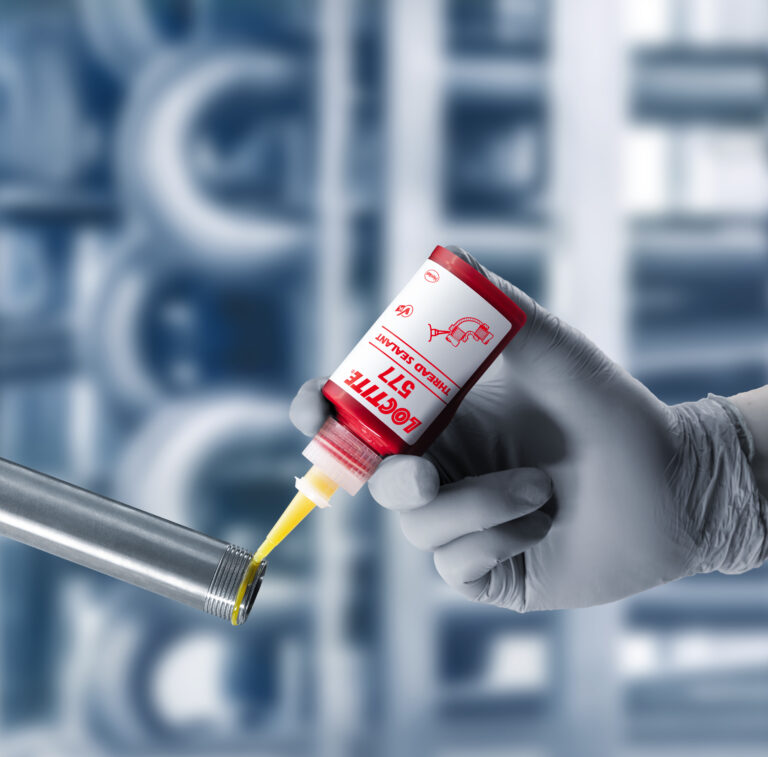
LOCTITE 577 is a yellow, high-viscosity anaerobic thread sealant paste that provides immediate sealing at low pressures. Its thixotropic formulation ensures the material stays where it is applied instead of flowing away. It also offers excellent chemical resistance and is suitable for both active and passive metals.
This thread sealant paste is the best choice:
- When you want to cover BSPT and NPT threads with a single product
- When process reliability and ease of application are key priorities
- When selection according to EN 751-1 is required
- Meets the requirements of KIWA GASTEC QA AR 214 for hydrogen gas mixtures containing up to 100% hydrogen gas. Certifications are available in selected countries.
Practical Checklist for Leak-Tight Threaded Connections in Hydrogen Systems
To ensure optimal performance of thread sealants, a short systematic check before release is recommended:
- Verify thread type: NPT or BSPT and select the appropriate product
- Consider materials: especially stainless steel and passive metals during process approval
- Define the assembly process: torque, need for adjustment, cycle time
- Plan leak testing: test medium, pressure levels, test duration
- Clarify certification requirements: e.g. availability of KIWA GASTEC QA AR 214 depending on country and project requirements
LOCTITE Thread Sealants as a Key Building Block for Leak-Tight Hydrogen Systems
If you want to prevent hydrogen gas leaks while reducing assembly effort and process complexity, thread sealants are a practical solution. With LOCTITE solutions, you can reliably address typical requirements in hydrogen technology.
This might also interest you
-
Understanding Electronics
Relays explained: Basics, function, and application
Relays are one of the fundamental components of electrical engineering and automation. They switch, disconnect, and control electrical circuits—often inconspicuous, but technically indispensable. But what exactly is a re...
-

Electrical Manufacturing
Soldering Technology in Manufacturing: From Manual Soldering Stations to Reflow Systems
Hand soldering, selective soldering, wave soldering, or reflow soldering: In practice, several soldering processes are often used in parallel today – within the same company, sometimes even on the same line. This is beca...
-

Understanding Electronics
What is an Operational Amplifier – and how is it Used?
Operational amplifiers (Op-Amps or OPVs for short) are among the most important components in analog technology. When used correctly, they amplify, filter, or combine electrical signals – and thus perform tasks that you ...