

Semiconductor Shortage: From Acute Chip Shortage to the New Market Situation
A world without semiconductors? Hard to imagine these days. In our digital and technology-driven world, nothing works anymore without programmable logic, microprocessors, and microcontrollers—and that’s unlikely to change. However, recent years in particular have clearly shown just how dependent the industrial and consumer goods sectors are on stable supply chains: microchips and related components were in short supply at times. What were the reasons for the global semiconductor shortage? How has the situation developed since then? And what factors are influencing the market today?
What were the causes of the semiconductor shortage?
The massive shortages of semiconductor components from 2020 to 2022 had several causes.
Fundamentally, it should be noted that demand for semiconductor products was already on the rise even before the pandemic. More and more industries and product developers were investing in technical innovations based on semiconductor technology – from medicine to the entertainment and automotive industries, and on to AI applications and e-mobility.
However, the situation worsened significantly with the onset of the COVID-19 pandemic.
Shift in Demand During the Pandemic
With the global lockdowns, many people’s lives shifted to their homes. The demand for laptops, 5G smartphones, networking hardware, game consoles, and other electronic devices for personal use skyrocketed.
Consumer electronics manufacturers secured production capacity early on. At the same time, other industries, particularly the automotive sector, initially reduced their orders. These short-term adjustments led to a redistribution of scarce manufacturing resources.
By the time demand in other industries recovered, capacity had already been committed long-term.
Production Outages and Raw Material Shortages
At the same time, nearly all industrial sectors—including the semiconductor sector—experienced production outages and supply difficulties. Plants in Texas and Japan were additionally hit by natural disasters, which in some cases caused long-term damage to production facilities and infrastructure.
Added to this were shortages of raw materials such as aluminum, silicon, copper, and specialized materials for wafer production. So-called ABF films, which are required for the manufacture of certain substrate plates, were also only available in limited quantities at times. Since there are only a few suppliers worldwide in this sector, production cutbacks had an immediate impact on the entire supply chain.
H3: Geopolitical Tensions and Strategic Preemptive Purchases
Political factors also influenced the market. Trade conflicts between the U.S. and China, as well as announced sanctions in the technology sector, led to strategic preemptive purchases.
Chinese companies stockpiled available chips and production equipment, in some cases on a large scale—with noticeable consequences for international customers.
Particularly affected: the automotive industry
Passenger cars have long been complex electronic systems on wheels. Whether it’s driver assistance systems or battery management systems in the e-mobility sector: modern vehicles are heavily dependent on semiconductors.
Until 2020, the rising demand for semiconductors in this sector did not pose any major problems. However, the pandemic changed that. While automakers scaled back production and canceled orders, demand for consumer electronics surged, and production capacities were reallocated accordingly. By the time the automotive sector picked up again, stocks of semiconductor materials and products had already been depleted.
The result was significant production losses. Factories around the world had to temporarily shut down, and millions of vehicles could not be manufactured. Specialized automotive microcontrollers and power semiconductors were particularly affected.
To this day, the automotive industry remains vulnerable to supply chain disruptions, as vehicles require an increasing number of chips per unit.
What is the market situation today?
Since 2023, the situation has noticeably eased in many areas. Lead times for numerous standard components have decreased significantly, and inventory levels have been replenished. Availability has stabilized, particularly for so-called commodity products, such as certain logic ICs or standard memory devices.
At the same time, the semiconductor market continues to be subject to cyclical fluctuations. Following a phase of very high demand, some segments even experienced overcapacity. The market situation must therefore be viewed in a nuanced manner.
In certain areas – such as state-of-the-art feature sizes, AI accelerators, or specialized high-performance components -capacity utilization remains high. Strong demand for data center and AI infrastructure is tying up significant manufacturing capacity.
Therefore, one cannot speak of a complete “normalization” in the sense of a permanently relaxed supply situation. Rather, the market has undergone structural changes.
New Structural Factors in the Semiconductor Market
The semiconductor shortage has triggered political and economic reactions worldwide. Through programs such as the EU Chips Act or the US CHIPS and Science Act, countries are investing billions in building their own manufacturing capacities.
The goal is to reduce dependencies and make supply chains more resilient. At the same time, large parts of modern semiconductor manufacturing remain regionally concentrated – particularly in East Asia. Geopolitical tensions therefore continue to have a direct impact on the market.
Furthermore, investments in new chip factories are extremely costly and involve long construction times. It often takes several years from planning to the start of production. The industry therefore remains capital- and technology-intensive in the long term.
What does this mean for procurement and development?
The experiences of recent years have heightened risk awareness among many companies.
Early planning, second-source strategies, and flexible product development are gaining importance. Component lifecycle management also plays a central role in minimizing obsolescence risks.
Close coordination between development, procurement, and distribution can help identify market movements early on and evaluate alternative solutions.
Stabilization Amid Structural Challenges
The acute semiconductor shortage of 2020 to 2022 has noticeably eased in many segments. Nevertheless, the market remains shaped by structural factors such as geopolitical developments, investment cycles, and technological innovation waves.
However, since semiconductors are considered a key strategic technology, forward-looking planning, flexible procurement strategies, and market transparency are correspondingly important. Bürklin offers a wide range of semiconductors – from diodes and power semiconductors to memory, logic, and sensor ICs – and supports you with transparent availability information and expert advice in selecting suitable components.
This might also interest you
-

Electrical Manufacturing
Connectors in Agriculture
Agriculture has undergone a major transformation in recent years. machinery, and implements are more connected, digital, and efficient than ever before. Smart farming, automated processes, and the electrification of key ...
-

Energy efficiency
Committed to the Climate: Energy Efficiency Act (EnEfG)
The Energy Efficiency Act (EnEfG) has been in force since November 2023 and obliges authorities, companies and data centers to take energy measures. What does the Energy Efficiency Act actually stipulate? And what strate...
-
Energy efficiency
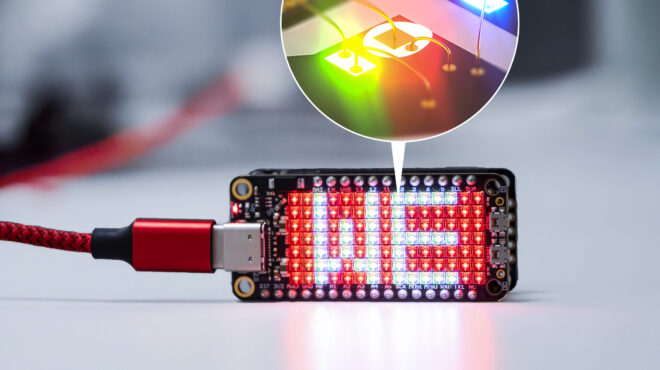
Light with precision: RGB LEDs with integrated control circuit
Additive color mixing with red, green and blue LEDs, grouped into pixels, opened up new possibilities for displays and lighting designs. When the first modules with integrated circuits (ICs) appeared around ten years ago...