
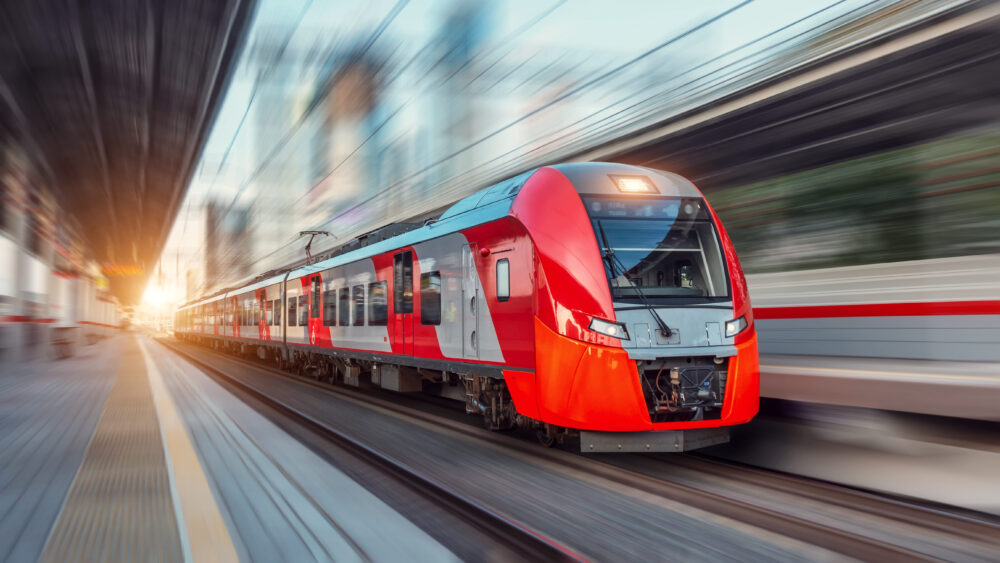
Reliable Railway Electronics: Choosing the Right Semiconductors for Maximum Safety and Longevity
Modern train electronics set the highest standards for reliability and safety. Continuous operation must be guaranteed even under extreme conditions. The selection of the right electronic components is far more than a design decision. It is the decisive factor for operational safety and long-term cost efficiency. We show you what matters when selecting semiconductors for railway applications and which practical approaches sustainably improve the robustness of your system.
Table of contents
- Vibration, Heat, Overvoltage: Demanding Operating Conditions in Railway Systems
- Voltage Ratings, Avalanche Rating & More: The Right Parameters for Railway Applications
- Automotive-Qualified Semiconductors: An Underestimated Advantage for Railway Electronics
- Expertise That Counts: Why Manufacturer Know-How Makes the Difference
- High-Quality Semiconductors as the Foundation of Future-Proof Railway Systems
- Future-Proof Railway Systems: The Right Approach from the Start
Vibration, Heat, Overvoltage: Demanding Operating Conditions in Railway Systems
Railway electronics are exposed to a unique combination of environmental and electrical stresses. Temperature fluctuations – from sub-zero outdoor conditions to heat accumulation within enclosures – require components with stable electrical characteristics across extended ranges. Simultaneously, mechanical stress caused by vibration and shock affects solder joints, housings, and internal semiconductor structures.
A particularly critical factor is the electrical environment. The pantograph’s continuous contact with overhead lines leads to high-energy arcing events. These arcs generate voltage spikes that propagate through the onboard electrical system. Additionally, long cable harnesses—often exceeding 100 metres—introduce significant inductance. When voltage drops occur and are subsequently restored, the resulting transient responses can generate substantial overvoltages and oscillations.
Such conditions pose a direct threat to semiconductor devices. In the best-case scenario, failures lead to operational delays; in the worst case, they may compromise passenger safety. Therefore, careful component selection is essential.
Voltage Ratings, Avalanche Rating & More: The Right Parameters for Railway Applications
One of the most effective strategies for ensuring reliability is the deliberate use of extended safety margins. In conventional industrial applications, a rectifier or MOSFET operating in a 110 V DC system might typically be rated for 200 V. However, in railway environments, this approach is insufficient.
Designers should instead consider components with significantly higher voltage ratings, often 400 V or more, to withstand transient overvoltages. Equally important is the selection of avalanche-rated devices. These components are specifically designed and tested to absorb defined surge energies without immediate failure.
Key Parameters for Component Selection
Key parameters to evaluate include:
- Forward peak current
- Reverse peak pulse power
- Avalanche energy rating
If the expected transient energy can be quantified through measurement or simulation, a conservative approach is recommended: selecting components capable of handling at least twice the calculated energy. This design philosophy reduces the probability of catastrophic failure and increases system resilience.
Although such components may involve higher initial costs, they significantly reduce long-term expenses related to maintenance, diagnostics, and system downtime.
Automotive-Qualified Semiconductors: An Underestimated Advantage for Railway Electronics
An often underutilised approach in railway electronics is the adoption of automotive-qualified semiconductors. Components that comply with the AEC-Q101 standard are designed to meet stringent reliability requirements under harsh environmental conditions.
What AEC-Q101 Means and Why It Matters for Railway Applications
AEC-Q101 is the internationally recognised qualification standard for discrete semiconductors in the automotive sector. It defines binding test procedures that ensure components function reliably even under extreme conditions. For overvoltage protection in railway electronics, this standard offers a decisive advantage: the operating conditions of trains share many similarities with automotive environments.
Qualification Processes at a Glance
These semiconductors undergo extensive qualification processes, including:
- Temperature cycling
- High-temperature reverse bias testing
- Power cycling
- Mechanical stress testing
As a result, they offer enhanced durability, stable performance at extreme temperatures, and improved resistance to electrical stress such as surges and short circuits.
Concrete Benefits for Designers in Railway Technology
For railway applications, these characteristics are highly advantageous. The operational profiles of trains share many similarities with automotive environments, particularly in terms of vibration, temperature variation, and exposure to transient electrical phenomena. By integrating automotive-qualified components, designers can achieve:
- Reduced failure rates
- Extended maintenance intervals
- Increased system availability
Despite higher procurement costs, the overall total cost of ownership is typically lower due to fewer replacements and reduced service interventions.
Expertise That Counts: Why Manufacturer Know-How Makes the Difference
In addition to careful component selection, early collaboration with semiconductor manufacturers such as Diotec can provide substantial benefits. Diotec’s Field Application Engineers (FAEs) and Quality Assurance (QA) specialists possess in-depth knowledge of component behaviour under real-world conditions.
They can support designers by:
- Recommending appropriate qualification levels
- Providing insights into failure mechanisms
- Advising on derating strategies
- Estimating component lifetime under specific operating conditions
Diotec has precise knowledge of the parameter variations, temperature dependencies, and built-in safety margins of its products. This expertise allows them to propose optimised solutions tailored to the specific requirements of railway systems. Through competent distribution partners such as Bürklin, this know-how is available directly and without complications.
Integrating this knowledge early in the design phase helps avoid costly redesigns and ensures that the selected components align with both technical and regulatory requirements.
High-Quality Semiconductors as the Foundation of Future-Proof Railway Systems
From a purely financial perspective, investing in high-quality semiconductors may initially appear less attractive. However, railway systems are characterised by long service lifetimes and high reliability expectations. Failures not only incur repair costs but also lead to operational disruptions and potential reputational damage.
By prioritising robust components and conservative design principles, operators benefit from:
- Lower maintenance costs
- Reduced downtime
- Improved system reliability
- Extended replacement cycles
These factors contribute directly to optimising the total cost of ownership, making high-quality semiconductor selection a strategically sound investment.
Future-Proof Railway Systems: The Right Approach from the Start
Ensuring reliable railway electronics requires more than selecting components based on nominal specifications. It demands a comprehensive approach that considers environmental stresses, electrical transients, and long-term operational requirements.
In summary, three key principles should guide your design process:
- Use above-average safety margins to account for transient stresses.
- Adopt automotive-qualified semiconductors to leverage proven reliability standards.
- Engage with manufacturer experts early to benefit from application-specific knowledge.
By following these guidelines, you can develop systems that are robust, reliable, and suitable for safety-critical applications. Ultimately, this approach enhances operational safety, extends maintenance intervals, and ensures sustainable performance in the demanding railway environment.
This might also interest you
-
Energy efficiency
Light with precision: RGB LEDs with integrated control circuit
Additive color mixing with red, green and blue LEDs, grouped into pixels, opened up new possibilities for displays and lighting designs. When the first modules with integrated circuits (ICs) appeared around ten years ago...
-
Measurement technology
Understanding Power Management ICs: Key Components of Modern Electronics
Efficiently distributing, regulating, and monitoring power is one of the central tasks of electronic systems today. Power density, feature sets, and reliability requirements are constantly increasing. At the same time, p...
-

Maintenance
Power Supply in the Control Cabinet: Selection, Sizing, and Fuse Protection
A stable power supply is the backbone of every industrial facility. The control cabinet is where power distribution, control systems, and protective mechanisms converge. It is here that the reliability of control systems...