
USB-C Connectors as the EU Standard for Chargers
A single charging port for many devices: What was long debated is now a reality. Since the end of 2024, the USB-C connector has been the mandatory standard for numerous small electronic devices in the EU. For laptops, the regulation takes effect in 2026. But what makes USB-C so special? Why was standardization necessary? And what are the benefits for consumers and the environment?
Table of contents
- Standardization of connectors: flexible, practical & sustainable
- One Connector for Many Devices
- Which devices are affected?
- How does the USB-C charging cable differ from other charging cables?
- What are the advantages of USB-C connectors?
- When was the EU regulation adopted?
- Wireless charging as a supplement
- USB-C as a Future-Proof Standard
Standardization of connectors: flexible, practical & sustainable
More isn’t necessarily better—one area where this is clearly evident is the world of connector systems.
Especially with smartphones, laptops, headphones, cameras, and other electronic devices, a wide variety of different charging ports has been the norm in recent decades. For consumers, this meant: different cables, different power adapters—and often unnecessary accessories gathering dust in a drawer.
In addition to the convenience aspect, sustainability was also among the reasons for standardization. The multitude of proprietary chargers led to a significant amount of electronic waste. With the so-called “Common Charger” Directive, the EU has established clear guidelines: USB-C is now mandatory as the charging port for numerous device categories.
The goal of the regulation is to increase compatibility, ease the burden on consumers, and reduce electronic waste.
One Connector for Many Devices
Many manufacturers—many connectors: This not only made switching between different brands difficult but also meant that even devices from the same company were not always compatible with the same chargers.
The new regulation addresses this issue. USB-C becomes the common interface for a wide range of small electronic devices. Consumers can use chargers across different manufacturers. Additionally, devices may now be sold without a power adapter, which reduces unnecessary multiple purchases.
This standardization thus provides clear added value for both consumers and the environment.
Which devices are affected?
The EU regulation specifically covers:
- Smartphones/cell phones
- Tablets
- Digital cameras
- Headphones and headsets
- Portable video game consoles
- Portable speakers
- E-readers
- Keyboards and mice
- Earbuds
- Portable navigation devices
Good to know: An extended implementation period applies to laptops. They must meet the requirements starting in 2026.
How does the USB-C charging cable differ from other charging cables?
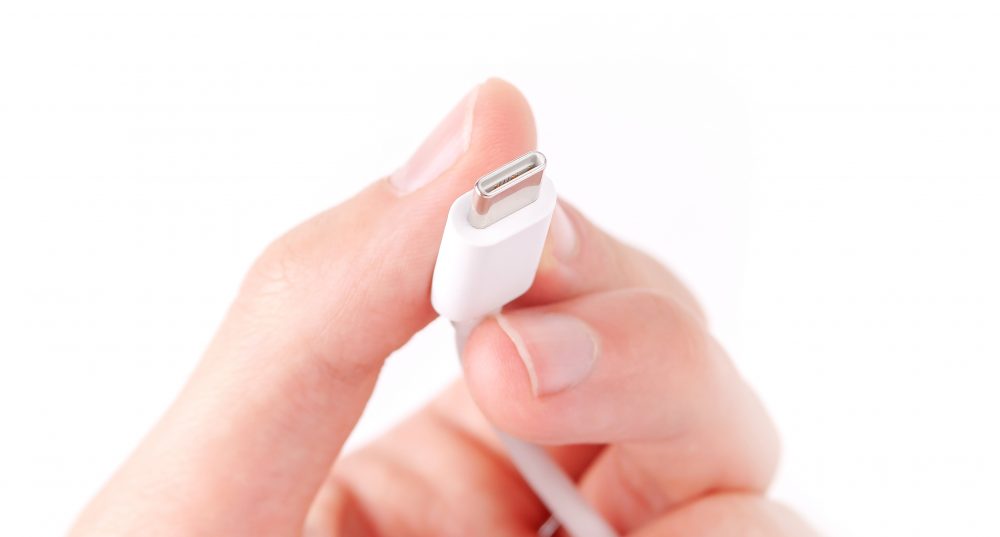
USB-C primarily refers to the design of the connector. Unlike older USB types, the USB-C connector has a compact, oval shape and is symmetrical in design. This means it can be plugged in regardless of which way it is oriented.
But USB-C differs from its predecessors in more than just its appearance. The interface is versatile and supports—depending on the specific standard—various data and power transfers.
What are the advantages of USB-C connectors?
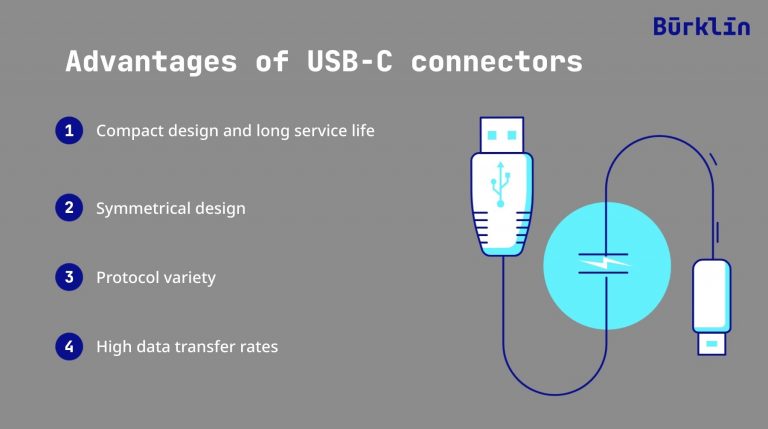
- Compact design and long service life: USB-C connectors are robustly built and designed for up to 10,000 insertion cycles. In comparison, older USB Type-A connectors typically have a lifespan of around 5,000 insertion cycles. With daily use, this translates to a significantly longer service life.
- Symmetrical design: Thanks to their point-symmetrical design, the new connectors have no top or bottom. The advantage: They fit seamlessly into the ports regardless of the orientation—a noticeable improvement in convenience for everyday use.
- High data transfer rates: Depending on the supported standard, USB-C enables high data rates—up to 10 Gbps with USB 3.1 and up to 20 Gbps with USB 3.2. Newer standards like USB4 go even further. In each case, both the cable and the connected devices must support the corresponding standard.
- Flexible protocol support: USB-C can transmit various types of signals, including data, audio, and video signals. Interfaces such as Thunderbolt or DisplayPort can also be implemented via USB-C. This eliminates the need for additional ports on devices.
- High-power charging with Power Delivery: A key advantage is support for USB Power Delivery (USB-PD). Depending on the version and model, this allows power of up to 240 watts to be transmitted. This means that not only smartphones, but also tablets and high-performance laptops can be charged via USB-C.
Important to note: The USB-C form factor does not automatically guarantee maximum charging power. The implemented protocols and the specifications of the respective device are decisive.
When was the EU regulation adopted?
In June 2022, the European Parliament and the EU member states agreed on the new directive. Following formal adoption, member states had time to transpose the requirements into national law. As of the end of 2024, USB-C will be the mandatory charging port for most affected devices. For laptops, the regulation takes effect in 2026.
Good to know: Products placed on the market before the regulations took effect are not affected by the regulation.
Wireless charging as a supplement
In addition to wired solutions, wireless charging is also becoming increasingly widespread. In this area, the Qi standard is primarily used, which enables energy transfer via electromagnetic induction.
The EU reserves the right to adjust the scope of the directive in the future should wireless charging methods continue to gain prominence. The goal remains a solution that is as cross-manufacturer and sustainable as possible.
USB-C as a Future-Proof Standard
With the introduction of USB-C as the EU standard for charging ports, an important step toward standardization and sustainability has been taken. Consumers benefit from greater compatibility and fewer types of cables, while electronic waste is expected to be reduced.
USB-C combines a compact design, high data rates, and high-power charging in a single connector system. This makes the interface not only a regulatory requirement but also technologically future-proof.
Robust and reliable USB-C connectors are therefore in demand across many sectors—from small electronic devices to industrial applications. Bürklin offers a wide range of connectors for various requirements and assists in selecting suitable solutions.
High-quality connectors from Bürklin Elektronik
Whether for small electrical devices, in agriculture, industry or medical technology, robust and reliable connectors are increasingly in demand from our customers. Bürklin has a wide range of connectors: from power connectors to automotive connectors to laboratory connectors and much more. In Bürklin Elektronik’s online store, individual models can be found easily and ordered immediately.
If you have any questions about the connector products, please contact the experts at Bürklin at any time! We will be happy to help you.
This might also interest you
-
Energy efficiency
Light with precision: RGB LEDs with integrated control circuit
Additive color mixing with red, green and blue LEDs, grouped into pixels, opened up new possibilities for displays and lighting designs. When the first modules with integrated circuits (ICs) appeared around ten years ago...
-

Measurement technology
Understanding Power Management ICs: Key Components of Modern Electronics
Efficiently distributing, regulating, and monitoring power is one of the central tasks of electronic systems today. Power density, feature sets, and reliability requirements are constantly increasing. At the same time, p...
-

Maintenance
Power Supply in the Control Cabinet: Selection, Sizing, and Fuse Protection
A stable power supply is the backbone of every industrial facility. The control cabinet is where power distribution, control systems, and protective mechanisms converge. It is here that the reliability of control systems...